3D Crop Scanning in Vineyards and Orchards
Updated: Feb 11
In the world of viticulture and high value fruit, precision is key. Crop managers are always looking for ways to improve their yields and enhance the quality of their grapes. One of the most exciting advancements in this field is the use of innovative 3D crop scanning solutions. These technologies are transforming how vineyards and orchards operate, providing valuable insights that can lead to better decision-making and increased profitability.
This post explains the benefits of these solutions, how they work, and some real-world examples of their application in vineyards and orchards.
What is 3D Crop Scanning?
3D crop scanning is a technology that uses advanced imaging techniques to create detailed three-dimensional models of crops. This process involves capturing data from various angles and using software to generate a comprehensive view of the plants.
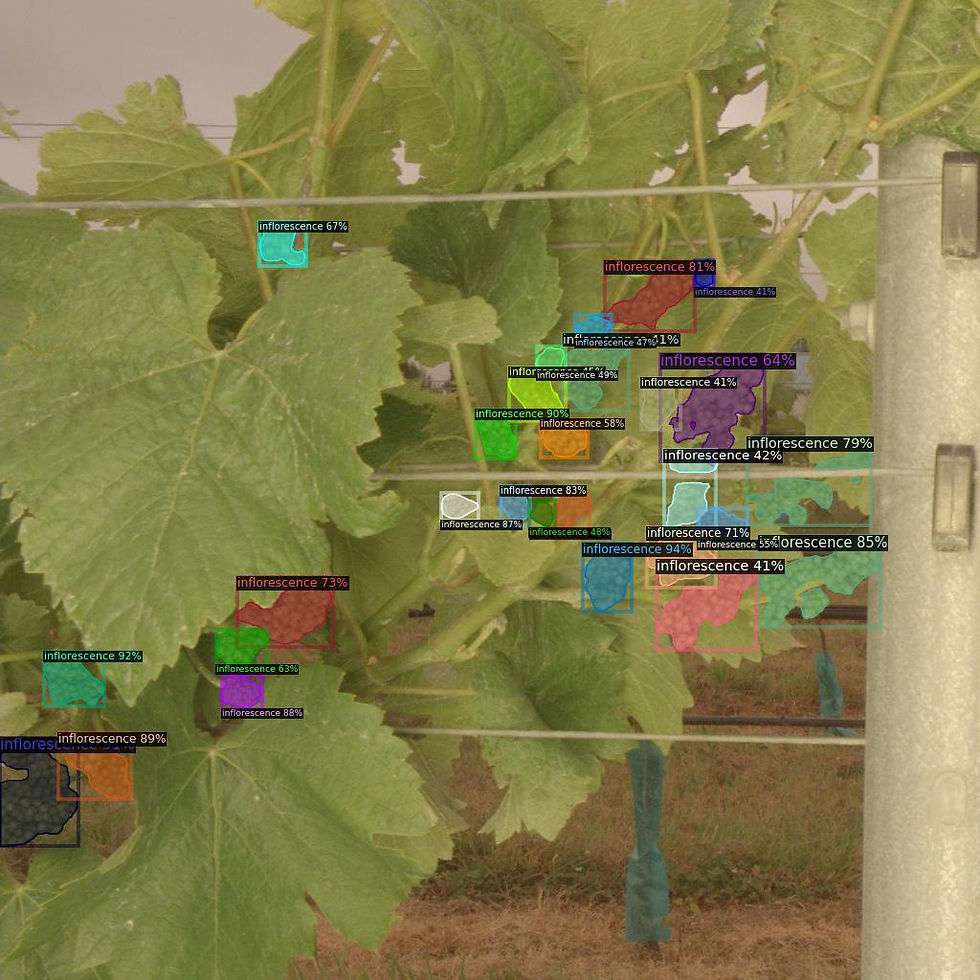
The primary goal of 3D crop scanning is to provide vineyard managers with accurate information about their crops. This includes data can be used for determining plant health, growth patterns, and fruit/inflorescence counts for yield estimation.
By utilising this technology, vineyard and orchard managers can make informed decisions about how to manage their vineyard.
How Does 3D Crop Scanning Work?
The process of 3D crop scanning typically involves several steps:
Data Collection: Autonomous rovers are used to capture images of the vineyard. These devices can cover large areas and can operate at night, minimising labour costs and human error.
Image Processing: The collected images are processed using specialised software. This software stitches the images together to create a 3D model of the vineyard. The 3D model is then segmented into plant parts (e.g. fruit, flowers, leaves, trunks, canes, branches etc.) and processed for specific plant part metrics (e.g. sizing, counts, and statistics)
Analysis: Once the 3D model is created, vineyard and orchard managers can analyse the data. This analysis can reveal important information about plant health, growth rates, and other factors.
Decision Making: With the insights gained from the analysis, vineyard owners can make better decisions regarding their crops. This can lead to improved yields and higher quality grapes.
Benefits of 3D Crop Scanning
The advantages of using 3D crop scanning in vineyards are numerous. Here are some of the key benefits:
Improved Crop Monitoring: 3D scanning allows for continuous monitoring of crop health. This means that vineyard managers can quickly identify issues and take action before they become serious problems.
Enhanced Precision Agriculture: With detailed data on plant health and growth, vineyard owners can apply fertilisers and pesticides more precisely. This not only saves money but also reduces environmental impact.
Yield Prediction: Accurate 3D models can aid in predicting yields more effectively. This information is crucial for planning harvests and managing resources.
Time and Cost Efficiency: Traditional methods of crop monitoring can be time-consuming and labor-intensive. 3D crop scanning streamlines this process, saving both time and money.
Better Resource Management: By understanding the specific needs of different areas within the vineyard or orchard, managers can allocate resources more effectively. This leads to healthier plants and better overall performance.
Challenges and Considerations
While 3D crop scanning offers many benefits, there are also challenges to consider. Here are some potential obstacles vineyard owners may face:
Technical Expertise: Operating the technology and analysing the data requires a certain level of technical skill. Horticultural consultants are often required to get the best data for your specific crop.
Data Management: The amount of data generated by 3D crop scanning can be overwhelming. An integration plan of how this data can feed into the everyday management of the vineyard or orchard smoothly may be required.
The Future of 3D Crop Scanning in Vineyards
As technology continues to advance, the future of 3D crop scanning in vineyards looks promising. Here are some trends to watch for:
Integration with Other Technologies: 3D crop scanning will likely be integrated with other precision agriculture technologies, such as soil sensors and weather monitoring systems. This will provide even more comprehensive data for vineyard management.
Increased Accessibility: As the technology becomes more widespread, costs are expected to decrease. This will make 3D crop scanning accessible to more vineyard and orchard managers, regardless of their size.
Enhanced Data Analysis: Advances in artificial intelligence and machine learning will improve data analysis capabilities. This will allow vineyard managers to gain deeper insights from their 3D models.
Embracing Innovation to Focus on What YOU Care About
The adoption of innovative 3D crop scanning solutions is revolutionizing the way vineyards operate. By providing detailed insights into crop health and growth, these technologies empower vineyard owners to make informed decisions.
As the industry continues to evolve, embracing these advancements will be crucial for staying competitive.
Investing in 3D crop scanning is not just about improving yields; it is also about fostering sustainability and ensuring the long-term health of vineyards.
With the right tools and knowledge, vineyard owners can navigate the challenges of modern agriculture and thrive in an ever-changing landscape.
In conclusion, the future of viticulture is bright, and 3D crop scanning is at the forefront of this transformation. By leveraging these innovative solutions, vineyard and orchard owne
rs can enhance their operations, improve grape quality, and contribute to a more sustainable agricultural future.

As the industry continues to embrace technology, the possibilities are endless. The journey toward a more efficient and productive vineyard is just beginning, watch this space to keep up-to-date with the future of crop monitoring.



Comments